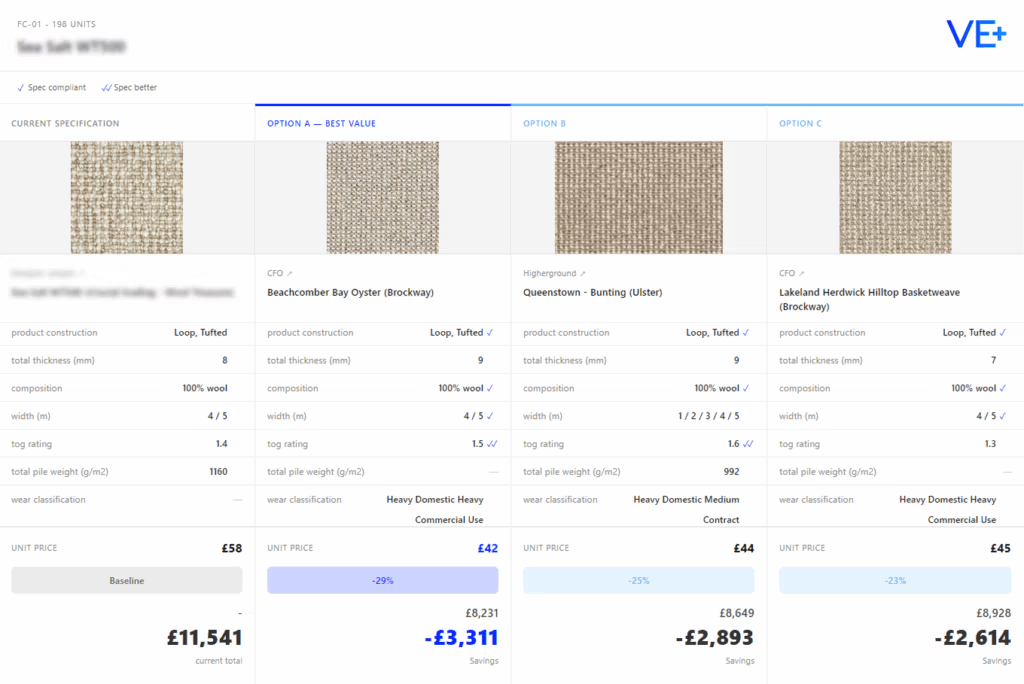
Value Engineering does not always land well as a term.
In quite a few projects, when VE is introduced, it is understood as a sign that something has gone wrong. Budgets are tight. Costs are higher than expected. Adjustments are needed. Over time, that association has shaped how people feel about it.
But the concept itself is not the problem.
At its core, Value Engineering is a simple idea. Are we achieving the required function in the most efficient way? Not the cheapest way. Not a shortcut. Just a more considered way of delivering the same outcome.
That is a sensible question on any project.
The difficulty is usually timing.
In many cases, VE only becomes a focus once the design is well developed and the budget pressure is already visible. By then, expectations are set and coordination has progressed. Making changes at that stage can feel disruptive, even if they are commercially necessary.
When you try to remove cost late in the process, the options are narrower. Choices become more about substitution than exploration. It can feel like adjusting something that was already settled, rather than shaping it deliberately from the beginning.
That is often where the negative perception comes from.
VE becomes associated with reduction. Reduction in cost, yes, but also sometimes perceived reduction in quality or intent. Even when that is not technically true, the process can feel reactive rather than thoughtful.
The irony is that Value Engineering works best when it is not reactive at all.
If it happens early, while there is still space to properly review alternatives and understand the market in depth, it looks very different. It becomes part of decision-making, not a correction exercise. It allows teams to align scope and budget before pressure builds.
Most people working on projects understand this instinctively. The challenge is that the structure of many projects only creates room for VE once something needs fixing.
So the discipline ends up carrying a reputation that is really about timing.
Value Engineering should not be about cutting back. Done at the right moment, it is about clarity. It is about making informed choices before constraints harden.
At VE+, we spend a lot of time thinking about how to support that earlier clarity. Not as an emergency response, but as part of how projects are shaped from the outset.