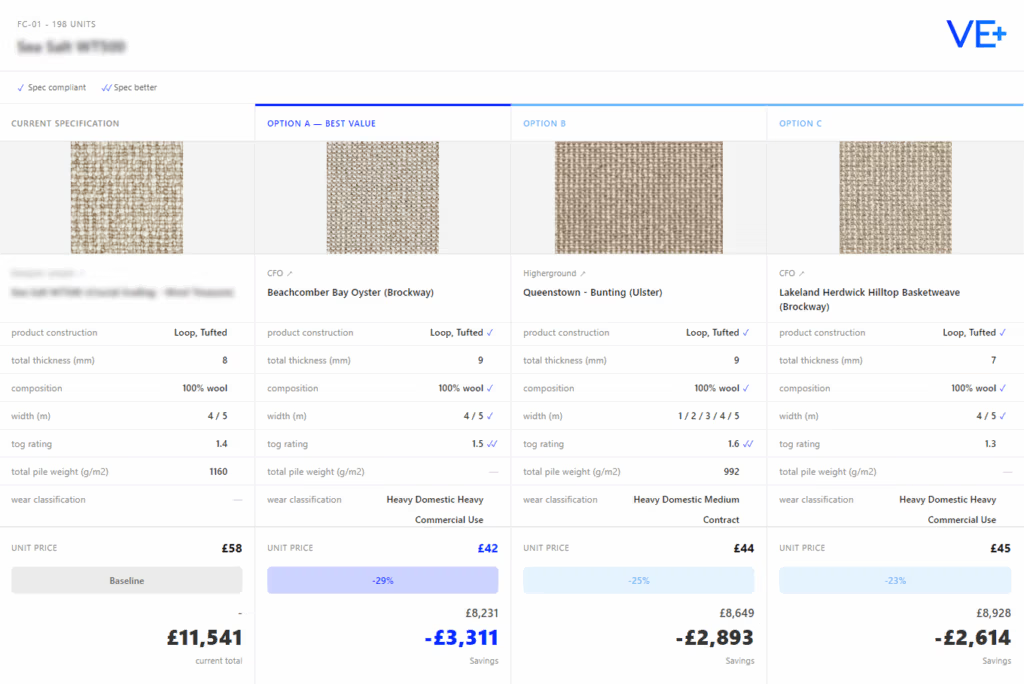
In many projects, when it comes to sourcing value alternatives, the market effectively narrows down to two or three suppliers. Not by policy, but by habit. These are the names people know, the ones that have delivered before, the ones that respond quickly to emails.
On the surface, this feels sensible. Familiar suppliers reduce uncertainty. Communication is smoother. Technical information is easier to obtain. When deadlines are tight, efficiency matters. But there’s a quiet cost to this convenience.
The finishes and materials market is wide. For almost every specified product, there are numerous viable alternatives, some offering comparable performance at lower cost, others offering better availability, shorter lead times, or slightly different commercial terms that make a meaningful difference at scale. When only two or three suppliers are considered, the competitive tension is limited from the outset.
It’s a bit like negotiating the price of a car after visiting only one or two dealerships. Even if those dealerships are reputable, you don’t really know where the true market level sits. Without broader visibility, you’re negotiating within a small bubble rather than against the full market.
Relying on a small circle also reinforces itself over time. The suppliers who are already visible stay visible. Those outside the circle rarely get the opportunity to compete. Over multiple packages and projects, this pattern quietly compounds. The missed savings on a single line item might be modest, but across an entire development, the cumulative effect can be significant.
This isn’t about distrusting existing suppliers. Many long-standing relationships are built on quality and reliability, and that matters. The issue is not the presence of trusted partners, it’s the absence of broader comparison.
QSs and pre-con teams understand this in principle. The challenge is practical. Expanding the supplier pool requires time: identifying additional manufacturers, collecting structured data, checking compliance, comparing like-for-like. Under live programme pressure, it’s far easier to stay within a known circle than to widen the net.
VE+ was shaped around this tension. The aim is not to disrupt relationships or add complexity, but to make wider market visibility practical, so decisions are informed by real breadth, not just familiarity. When the full market is in view, savings are less likely to slip quietly off the table.