Most arguments between architects and quantity surveyors are not really arguments about design versus cost. They are arguments between two parties who each have strong expertise, but neither has the full picture.
In my experience on the architectural side, products are specified for intent, performance, and aesthetics. Cost visibility during design is negligently poor. The entire specification ecosystem – the sample libraries, the product databases, the technical datasheets is built to celebrate visual quality and technical performance. Cost is a secondary consideration at best, and often not considered at all until the QS picks up the tender documents weeks or months later.
This is a strange place to land, given how much cost shapes everything downstream. But it is the structural reality. The incentives, the tools, and the professional vocabulary of architectural specification are all oriented around design quality. Cost signals rarely enter the room early enough to change decisions that have already been made.
On the commercial side, I am learning to see just how sharp experienced QSs are at identifying expensive line items. A QS can look at a schedule of finishes and immediately spot where budget exposure sits. What they are often missing, though, is the context behind the choices, the visual reasoning, the performance criteria, the alternatives that were already considered and discounted. Without that context, a flagged line item can look like extravagance when it was actually a carefully reasoned technical decision.
Both sides are partly right. And neither has the full picture early enough to do anything useful with it.
The conventional response is to schedule more coordination meetings. But the coordination problem is really an information problem. The QS needs to understand design intent to give cost feedback that is actually usable. The architect needs cost signals early enough to make decisions that are still reversible. At the moment, neither gets what they need when they need it.
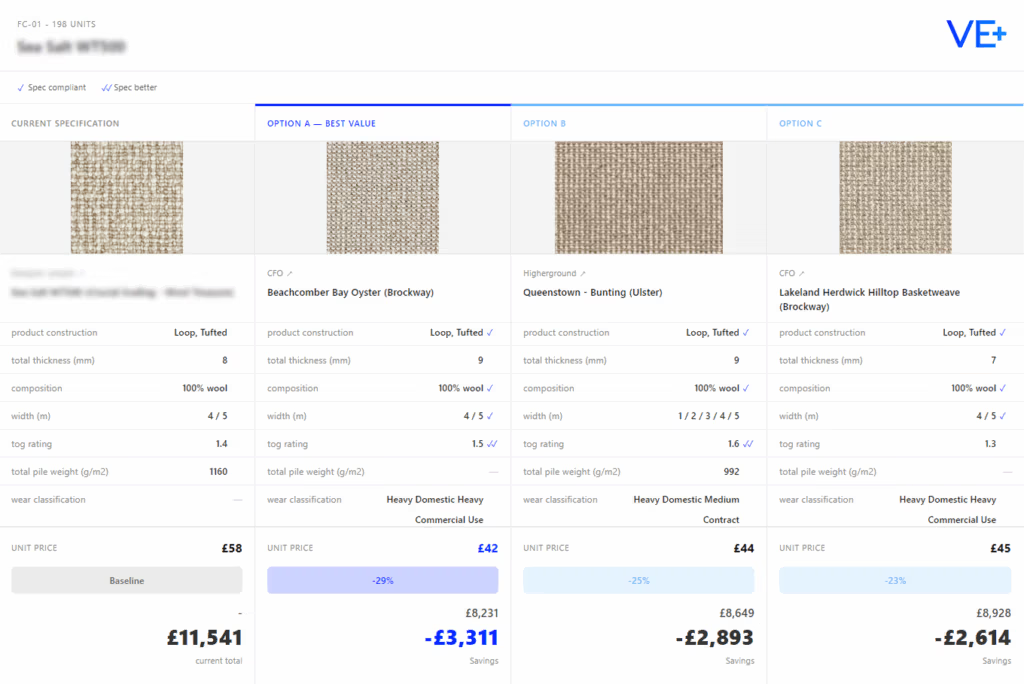
What the industry is missing is a shared decision surface. A place where specification intent, technical reasoning, and commercial visibility exist in the same view, early enough in the process to matter. A place where a cost flag arrives alongside the design context that explains the choice, making it possible to evaluate alternatives rather than simply cut line items.
At VE+, this is precisely the gap we are trying to close. Not by adding another meeting, but by building the information layer that makes design and cost decisions visible to both sides at the same time.