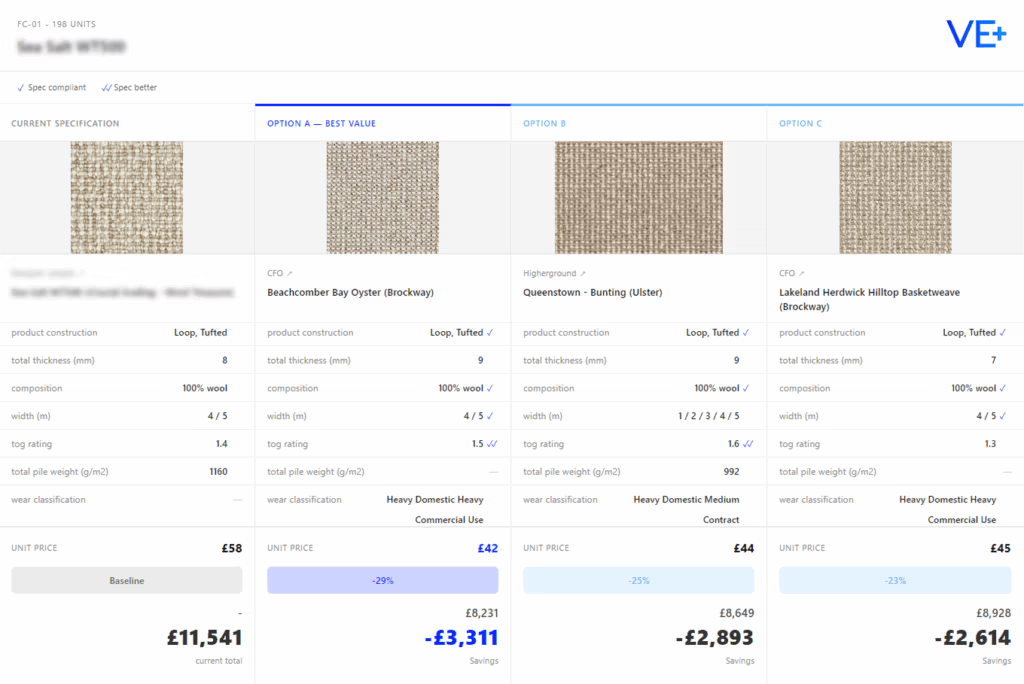
There is a recurring frustration in property development that almost every design team will recognise. Value engineering arrives late. The decisions are already locked in. Someone has spent weeks on the tile selection. The staircase timber has been mocked up five times before making it into the schedule. The copper finish for the sanitary ware has been agreed across three coordination meetings. Then the cost department asks for a 20% cut.
What follows is predictable. Stone turns to porcelain. Timber gets swapped for LVT. The copper finish disappears from the schedule. Friction builds between the architect, the QS, and the project manager. Trust between team members erodes. Energy that should be going into the next problem goes into defending the last one.
The idea isn’t broken. The process is.
It is easy to conclude from that pattern that value engineering itself is the problem – that it inevitably means downgrading. That framing misses where the friction actually comes from.
Most design teams are working with a tiny slice of the market. Alternatives are limited to known suppliers, existing relationships, and whatever can be sourced quickly under time pressure. So when the VE bell rings late in the programme, the logic feels obvious: we’ve already searched the field – there’s no choice but to find something cheaper.
That logic is wrong, but it is structurally hard to escape. When the only visible options are the ones already specified, downgrading is the only lever left to pull. Value engineering becomes a synonym for compromise because the search space is too small for it to mean anything else.
What a proper market review actually looks like
The “we’ve priced it, this is what it costs” assumption falls apart the moment teams look further into the wider market. In the project reviews analysed by VE+, 94% of the time, there is at least one alternative product on the market that meets the same technical requirements and the same aesthetic intent at a materially lower cost line.
When that alternative exists, the conversation changes shape. The architect sees the same visual and the same technical performance. The PM sees the same lead time. The QS sees a different price line. The VE discussion stops being adversarial because nobody is being asked to give anything up.
That is what value engineering should be: a proper market review, conducted with enough breadth to find equivalents rather than substitutes. The problem isn’t availability. It’s visibility.
The starting point
At VE+, that visibility gap is the starting point. The industry expects deep market insight and efficient value engineering, but the systems, workflows, and information structures currently make that very difficult to achieve in practice. Closing that gap is what shifts value engineering from a late-stage cost-cutting exercise to an earlier-stage design decision layer – one where cost, performance, and design intent can be balanced before anything has to be given up.
Download a free project summary report covering real savings by package, line-item alternative example with live supplier pricing, and verified cost reductions from a live tender.