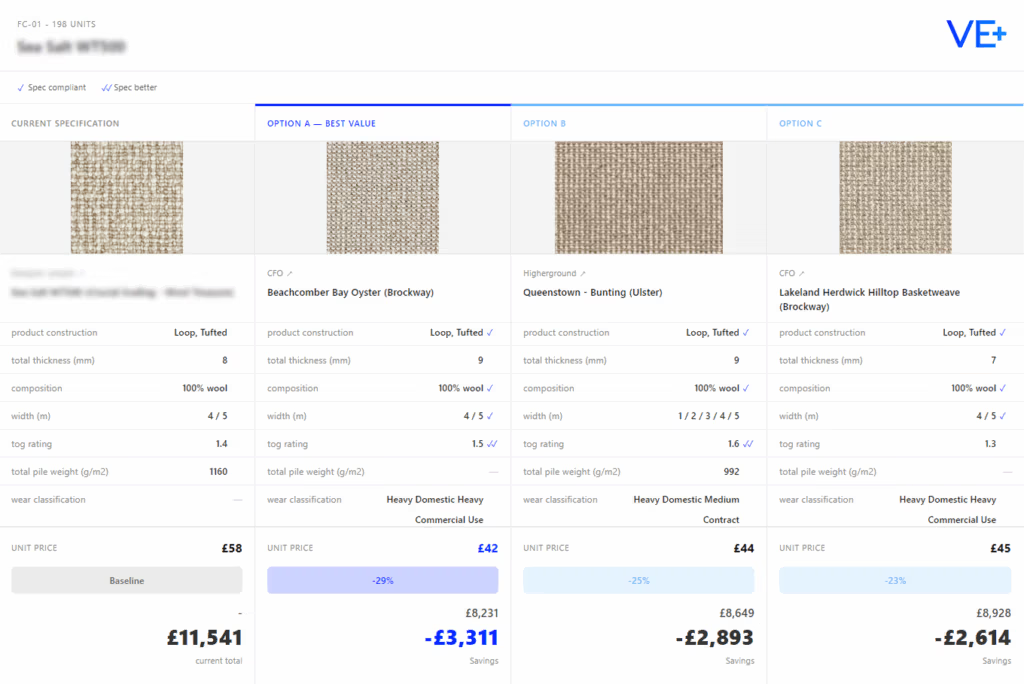
There is a deliverable that pre-construction and QS teams are increasingly expected to produce: an itemised schedule of costed alternatives. Every specification line carries an original product, a like-for-like substitute, confirmed pricing, and a recommended saving. Clear enough for client presentation. Robust enough for procurement sign-off.
The expectation is reasonable. What is less visible is the volume of work the artefact conceals.
For each specification on the schedule – finishes, sanitary-ware, lighting, small power, a team needs to identify comparable alternatives, check them against the visual and technical brief, and secure confirmed supplier pricing rather than estimates. That process repeats across every line, typically within a compressed timeline set before the full complexity of the task became clear.
The difficulty is structural rather than operational. The construction materials market is fragmented across hundreds of suppliers, most of whom publish product data in formats that are not directly comparable – PDFs, catalogues, and siloed distributor systems. Finding a genuine like-for-like alternative means navigating that fragmentation manually, usually under time pressure, with limited visibility into what the wider market actually offers.
A useful way to think about it: assembling a price comparison without access to a comparison platform. The data exists. But pulling it from individual sources, each in its own format, on a tight deadline, is a qualitatively different exercise from having it structured and searchable in one place. The work is not impossible; it is simply far more labour-intensive than the clean output suggests.
When the market is visible and comparable in structured form, the nature of that work shifts. Sourcing becomes verification. A schedule across fifty-odd specifications, one that would otherwise require weeks of coordinated effort, becomes achievable within a normal pre-construction window. And the savings that result are not primarily a function of effort; they are a function of coverage. Seeing more of what is available, compared against the brief in a consistent format, produces better recommendations almost by definition. A six-figure saving on a project is not remarkable because the team worked harder, it is what becomes possible when the visibility gap closes.

When design and cost argue, the real gap is information. The limiting factor in producing a costed alternatives schedule is rarely the skill or diligence of the commercial team. It is the visibility and structure of the market data they have to work with. That is the gap worth closing.